
La ciudad como laboratorio
Palabras clave:
Ritmos circadianos, vigilancia zoonótica, metagenómica viral, Una SaludResumen
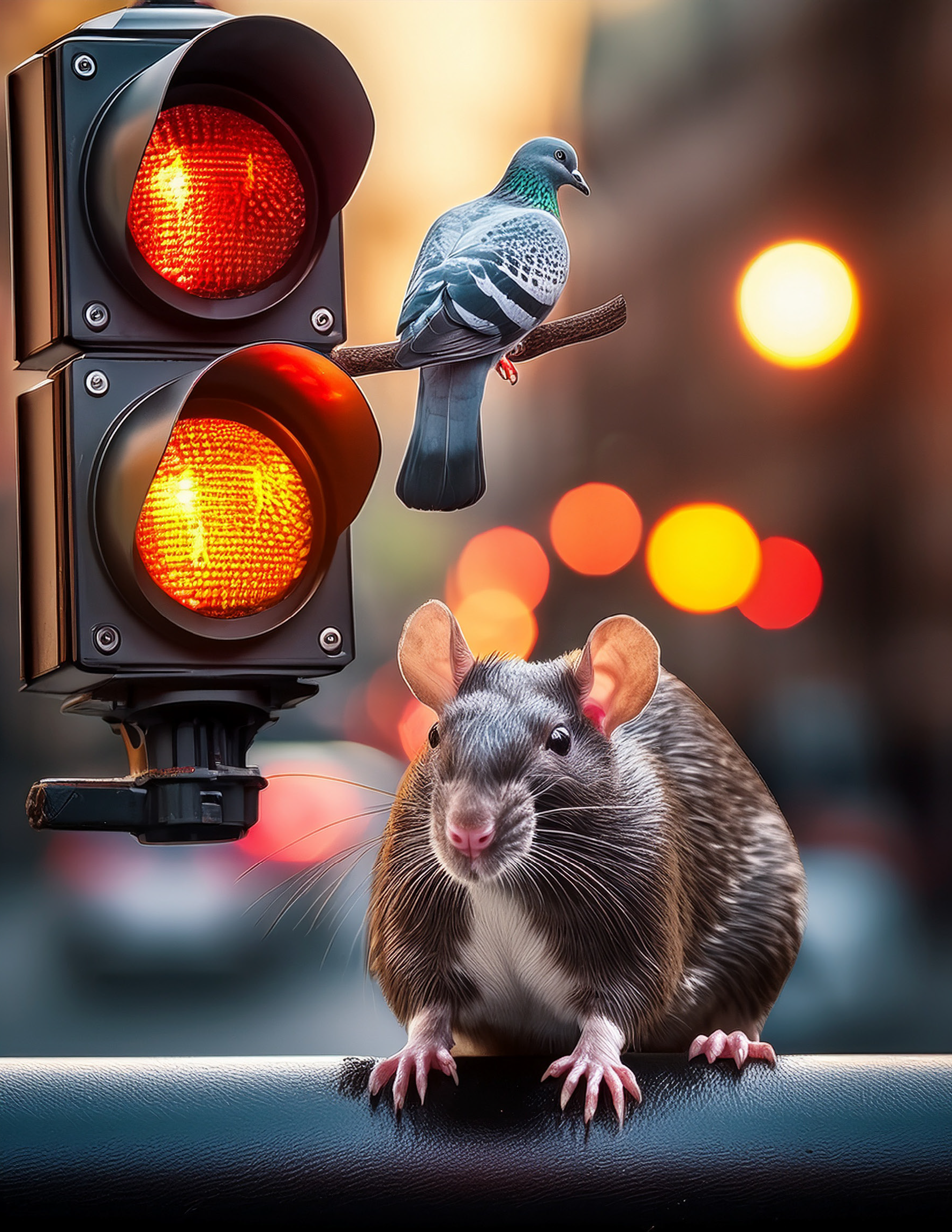
Las ciudades son ecosistemas donde ratas, palomas y murciélagos pueden funcionar como “sensores vivos” de cambios biológicos. Al convivir con basura, agua, alimentos, mascotas y alcantarillas, se acumulan rastros que permiten detectar señales tempranas de riesgo. Este artículo propone anticiparnos mediante muestras sencillas y no invasivas, antes de que aparezcan casos de infección o brotes en personas y animales, o signos de deterioro ambiental. Estas señales incluyen microbios, virus y fragmentos de material genético. Integradas en varias capas, se resumen en un semáforo por zonas que mide el nivel de atención requerido en cada área.
Citas
Meurens, F., Dunoyer, C., Fourichon, C., Gerdts, V., Haddad, N., Kortekaas, J., et al. (2021). Animal board invited review: Risks of zoonotic disease emergence at the interface of wildlife and livestock systems. Animal, 15(6), 100241. https://doi.org/10.1016/j.animal.2021.100241
Schilling, A. K., Mazzamuto, M. V., & Romeo, C. (2022). A review of non-invasive sampling in wildlife disease and health research: What’s new? Animals, 12(13), 1719. https://doi.org/10.3390/ani12131719
Kimura, M., Kothari, S., Gohir, W., Camargo, J. F., & Husain, S. (2023). MicroRNAs in infectious diseases: Potential diagnostic biomarkers and therapeutic targets. Clinical Microbiology Reviews, 36(4), e00015-23. https://doi.org/10.1128/cmr.00015-23
Yan, H., Jiao, H., Liu, Q., Zhang, Z., Xiong, Q., Wang, B. J., et al. (2021). ACE2 receptor usage reveals variation in susceptibility to SARS-CoV and SARS-CoV-2 infection among bat species. Nature Ecology & Evolution, 5(5), 600–608. https://doi.org/10.1038/s41559-021-01407-1
Ribas, M. P., García-Ulloa, M., Espunyes, J., & Cabezón, O. (2023). Improving the assessment of ecosystem and wildlife health: Microbiome as an early indicator. Current Opinion in Biotechnology, 81, 102923. https://doi.org/10.1016/j.copbio.2023.102923
Nguyen, N. H., Song, Z., Bates, S. T., Branco, S., Tedersoo, L., Menke, J., et al. (2016). FUNGuild: An open annotation tool for parsing fungal community datasets by ecological guild. Fungal Ecology, 20, 241–248. https://doi.org/10.1016/j.funeco.2015.06.006
Elbehiry, A., & Abalkhail, A. (2025). Metagenomic next-generation sequencing in infectious diseases: Clinical applications, translational challenges, and future directions. Diagnostics, 15(16), 1991. https://doi.org/10.3390/diagnostics15161991
Mejias, A., Cohen, S., Glowinski, R., & Ramilo, O. (2021). Host transcriptional signatures as predictive markers of infection in children. Current Opinion in Infectious Diseases, 34(5), 552–558. https://doi.org/10.1097/QCO.0000000000000750
Descargas
Publicado
Cómo citar
Número
Sección
Licencia
Derechos de autor 2026 Revista de divulgación científica iBIO

Esta obra está bajo una licencia internacional Creative Commons Atribución-NoComercial-SinDerivadas 4.0.
Se permite el autoarchivo o deposito de los trabajos en su versi´ón post-publicación (versión editorial) en cualquier repositorio personal, institucional o temático, redes sociales o científicas. Lo anterior aplica desde el momento de la publicación del artículo en cuestión en la página web de la Revista de divulgación científica iBIO.