
Copper biosorption: The power of bacteria to restore contaminated environments
Keywords:
Biosorption, bacterial consortia, copperAbstract
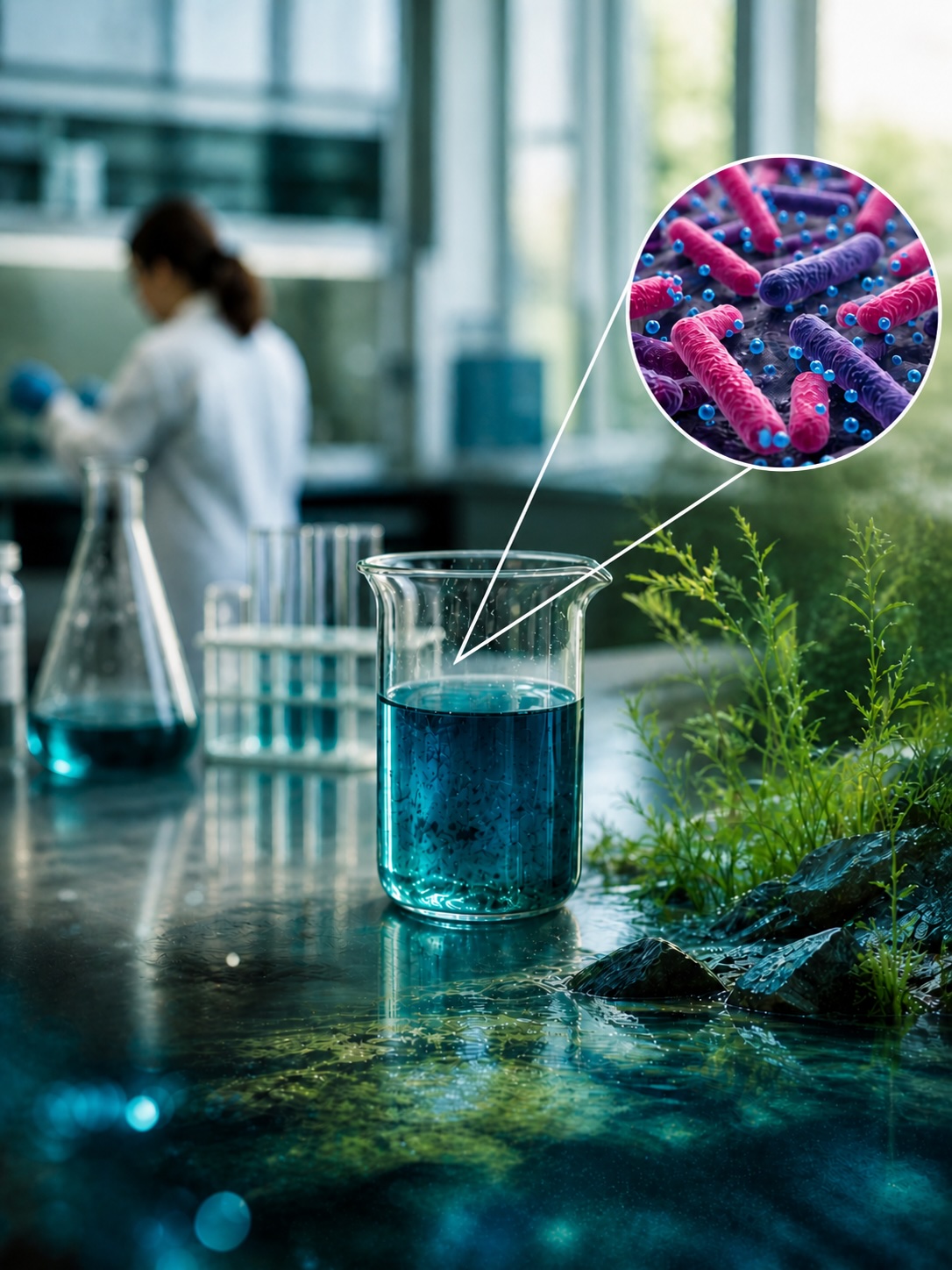
Copper pollution threatens ecosystems due to its high toxicity. In response, bacteria act as tiny “biological magnets” in a phenomenon called biosorption, a process by which metals adhere to their surface. When different bacterial species join together to form consortia, they can achieve surprising results against copper compared to when they act alone. This article addresses the environmental impact of copper and how biosorption by bacterial consortia constitutes a natural strategy for sustainable bioremediation, outlining challenges and opportunities for its large-scale application.
References
Saidon, N. B., Szabó, R., Budai, P., & Lehel, J. (2024). Trophic transfer and biomagnification potential of environmental contaminants (heavy metals) in aquatic ecosystems. Environmental Pollution, 340, 122815. https://doi.org/https://doi.org/10.1016/j.envpol.2023.122815
Murtić, S. (2024). Heavy Metals Dynamics in the Soil-Plant Continuum. In N. Kumar (Ed.), Heavy Metal Toxicity: Human Health Impact and Mitigation Strategies (pp. 25-43). Springer Nature Switzerland. https://doi.org/10.1007/978-3-031-56642-4_2
Dhiman, V. (2024). Heavy Metal Toxicity and Their Effects on Environment. In: Kumar, N. (eds) Heavy Metal Toxicity. Environmental Science and Engineering. Springer, Cham. https://doi.org/10.1007/978-3-031-56642-4_1
Novackova, I., Hrabalova, V., Slaninova, E., Sedlacek, P., Samek, O., Koller, M.,…Obruca, S. (2022). The role of polyhydroxyalkanoates in adaptation of Cupriavidus necator to osmotic pressure and high concentration of copper ions. International Journal of Biological Macromolecules, 206, 977-989. https://doi.org/https://doi.org/10.1016/j.ijbiomac.2022.03.102
R., Suresh, K., & Jiang, G. (2022). Bacterial bioremediation of heavy metals in wastewater: A review of processes and applications. Journal of Water Process Engineering, 48, 102884. https://doi.org/https://doi.org/10.1016/j.jwpe.2022.102884
Irawati, W., Ompusunggu, N. P., & Yuwono, T. (2018). Influence of bacterial consortium for copper biosorption and accumulation. AIP conference proceedings.
Ghosh, A., Sah, D., Chakraborty, M., & Rai, J. P. N. (2024). Mechanism and application of bacterial exopolysaccharides: An advanced approach for sustainable heavy metal abolition from soil. Carbohydrate Research, 544, 109247. https://doi.org/https://doi.org/10.1016/j.carres.2024.109247
Che, S., Wang, J., Zhou, Y., Yue, C., Zhou, X., Xu, Y.,…Li, S. (2024). The adsorption and fixation of Cd and Pb by the microbial consortium weakened the toxic effect of heavy metal-contaminated soil on rice. Chemical Engineering Journal, 497, 154684.
Downloads
Published
How to Cite
Issue
Section
License
Copyright (c) 2026 Revista de divulgación científica iBIO

This work is licensed under a Creative Commons Attribution-NonCommercial-NoDerivatives 4.0 International License.
Self-archiving or deposit of the works in their post-publication version (editorial version) is permitted in any personal, institutional or thematic repository, social or scientific networks. The above applies from the moment of publication of the article in question on the website of the Revista de divulgación científica iBIO.