
CRISPR-Cas: cancer’s new superdetective
Keywords:
Clinical diagnosis, cancer, microRNAsAbstract
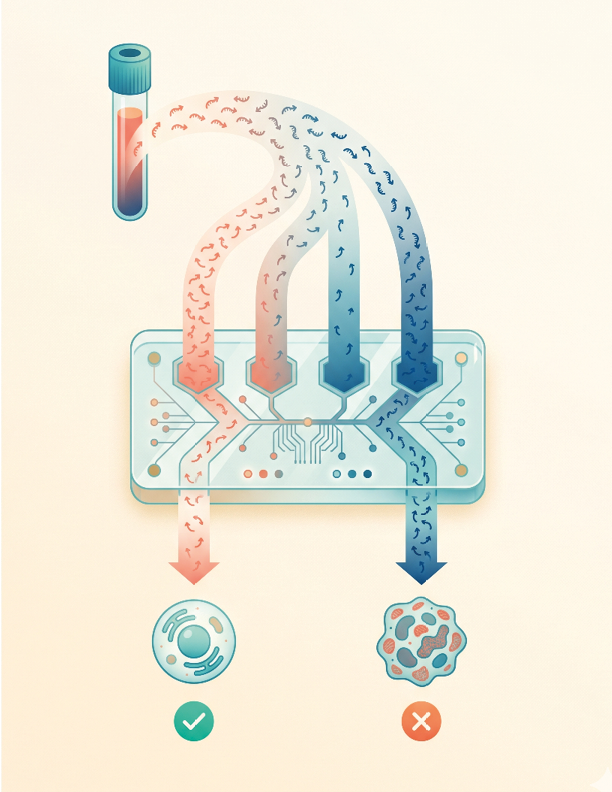
In the search for new diagnostic alternatives for diseases such as cancer, microRNAs are increasingly used to identify the presence or absence of a disease based on their concentration, through miniaturized techniques that enable less invasive diagnostics. Since they do not require specialized equipment and use samples of bodily fluids, these tools can be more accessible to people in different regions, enabling timely diagnosis through screening. Furthermore, emerging technologies such as CRISPR-Cas13 can be integrated into these platforms to detect microRNAs with high specificity, driving the development of early, portable, and accessible methods for cancer detection and monitoring.
References
Bray, F., Laversanne, M., Sung, H., Ferlay, J., Siegel, R. L., Soerjomataram, I., Jemal, A. (2024). Global cancer statistics 2022: GLOBOCAN estimates of incidence and mortality worldwide for 36 cancers in 185 countries. CA: a cancer journal for clinicians 74(3), 229–263. https://doi.org/10.3322/caac.21834
González-Zago, A., Fierro-Atondo, F. A., Ramírez-Juárez , N., Pérez-Corro , M. Ángel, Anaya-Ruiz , M., Maycotte, P. (2025). Tendencias 2018-2024 de cáncer en patología de un hospital de México oriente. Revista Médica Del Instituto Mexicano Del Seguro Social 63(6), e6735. https://doi.org/10.5281/zenodo.17342455
Smolarz, B., Durczyński, A., Romanowicz, H., Szyłło, K., Hogendorf, P. (2022). miRNAs in cancer (review of literature). International journal of molecular sciences 23(5), 2805. https://doi.org/10.3390/ijms23052805
Cuellar-Gomez, H., Ocharán-Hernández, M. E., Calzada-Mendoza, C. C., Comoto-Santacruz, D. A. (2021). Serum miRNA profile as a potential tool for non-invasive gastric cancer diagnosis in Mexican patients. Perfil de miARNs séricos como una potencial herramienta para el diagnóstico de cáncer gástrico no invasivo en pacientes mexicanos. Cirugia y cirujanos 89(6), 748–754. https://doi.org/10.24875/CIRU.20000963
Habib, A. H., Sain, Z. M., Rafeeq, M., Karami, M. M., Alsufyani, H. A., Iqbal, J., Chaieb, K.,Altayb, H. N., Nadeem, M. S., Al-Abbasi, F. A., Kazmi, I. (2026). MicroRNA-CRISPR biosensors for cancer diagnostics. Clinica chimica acta 583, 120837. https://doi.org/10.1016/j.cca.2026.120837
Wang, Y., Jiang, H., Zhang, Y., Yang, Q., Song, Y., Gao, Y. (2026). Microfluidic platforms for CRISPR-based biosensing advancing molecular diagnostics from benchtop to point-of-care. Sensors and Diagnostics, 5(2), 116–135. https://doi.org/10.1039/d5sd00176e
Downloads
Published
How to Cite
Issue
Section
License
Copyright (c) 2026 Revista de divulgación científica iBIO

This work is licensed under a Creative Commons Attribution-NonCommercial-NoDerivatives 4.0 International License.
Self-archiving or deposit of the works in their post-publication version (editorial version) is permitted in any personal, institutional or thematic repository, social or scientific networks. The above applies from the moment of publication of the article in question on the website of the Revista de divulgación científica iBIO.