
When the cell wall fights: the role of xyloglucans during arbuscular mycorrhization
Keywords:
Cell wall, arbuscular mycorrhizal, xyloglucansAbstract
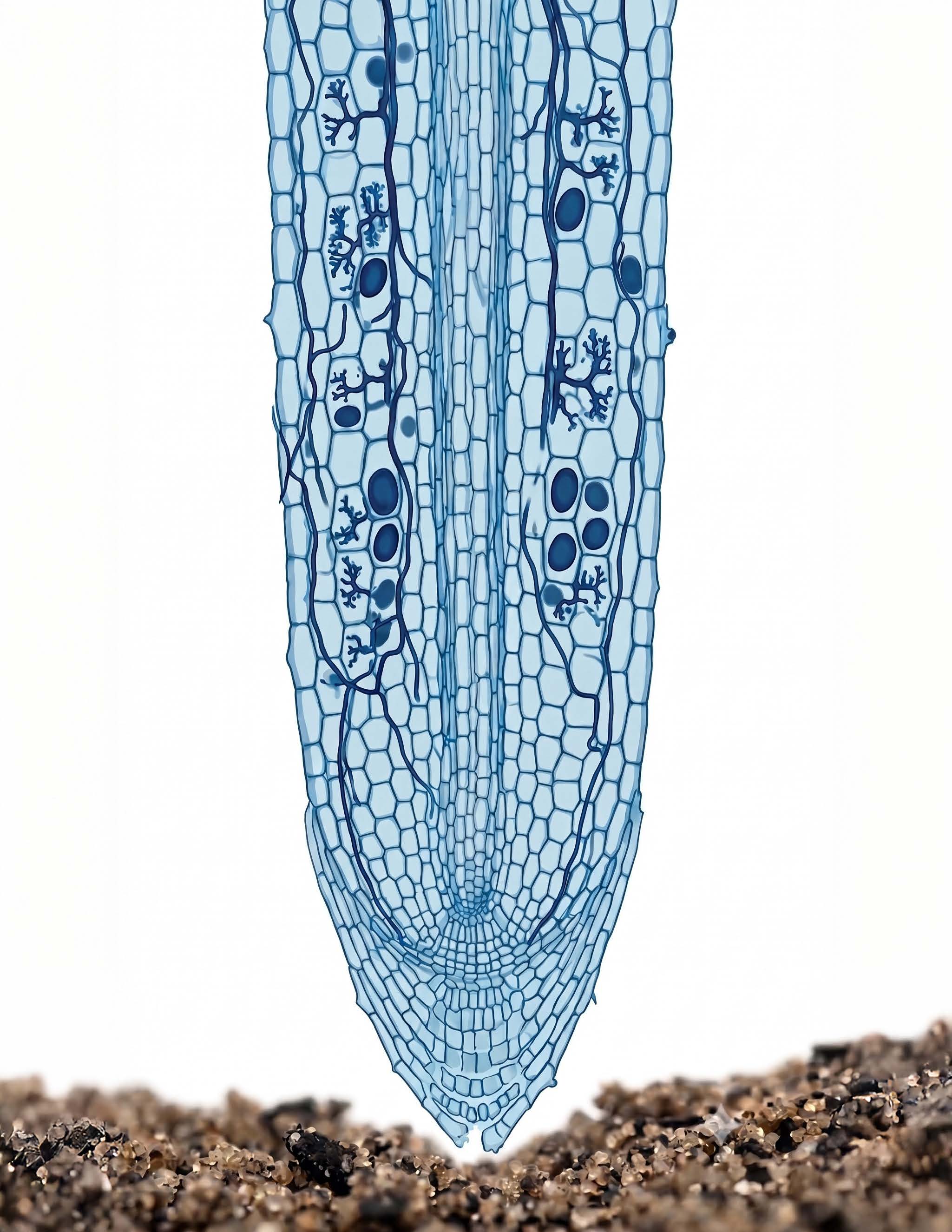
Plants are exposed to diverse environmental stresses that limit growth and development. The plant cell wall, a dynamic and complex structure, serves as a critical protective barrier. Xyloglucans, key polysaccharide components, interact with cellulose to modulate cell wall flexibility and tissue mechanics. Arbuscular mycorrhizal symbiosis enhances nutrient acquisition and can influence interactions with other microorganisms by activating genes involved in cell wall remodeling, thereby increasing pathogen resistance. Understanding the molecular and physiological mechanisms underlying these processes is crucial for designing sustainable strategies to enhance crop resilience and productivity under challenging environmental conditions.
References
Cosgrove, D. J. (2022). Building an extensible cell wall. Plant Physiology, 189, 1246-1277. DOI: 10.1093/plphys/kiac184.
Tenhaken, R. (2015). Cell wall remodeling under abiotic stress. Frontiers in Plant Science, 5, 1-9. DOI: 10.3389/fpls.2014.00771.
Pauly, M., & Keegstra, K. (2016). Biosynthesis of the plant cell wall matrix polysaccharide xyloglucan. Annual Review of Plant Biology, 67, 235–259. DOI: 10.1146/annurev-arplant-043015-112222.
Sarmiento-López, L. G., López-Espinoza, M. Y., Juárez-Verdayes, M. A., & López-Meyer, M. (2023). Genome-wide characterization of the xyloglucan endotransglucosylase/hydrolase gene family in Solanum lycopersicum L. and gene expression analysis in response to arbuscular mycorrhizal symbiosis. PeerJ, 11, e15257. DOI: 10.7717/peerj.15257.
Bojórquez-Armenta, Y. d. J., Sarmiento-López, L. G., Pozo, M. J., Castro-Martínez, C., & López-Meyer, M. (2025). Characterization of endoglucanase (GH9) gene family in tomato and its expression in response to Rhizophagus irregularis and Sclerotinia sclerotiorum. Plants, 14(22), 3458. https://doi.org/10.3390/plants14223458
Downloads
Published
How to Cite
Issue
Section
License
Copyright (c) 2026 Revista de divulgación científica iBIO

This work is licensed under a Creative Commons Attribution-NonCommercial-NoDerivatives 4.0 International License.
Self-archiving or deposit of the works in their post-publication version (editorial version) is permitted in any personal, institutional or thematic repository, social or scientific networks. The above applies from the moment of publication of the article in question on the website of the Revista de divulgación científica iBIO.