
The medicine of the future based on a biomimetic material inspired by tooth enamel
Keywords:
Smart biomaterials, hydroxyapatite nanofibers, theranostic materialsAbstract
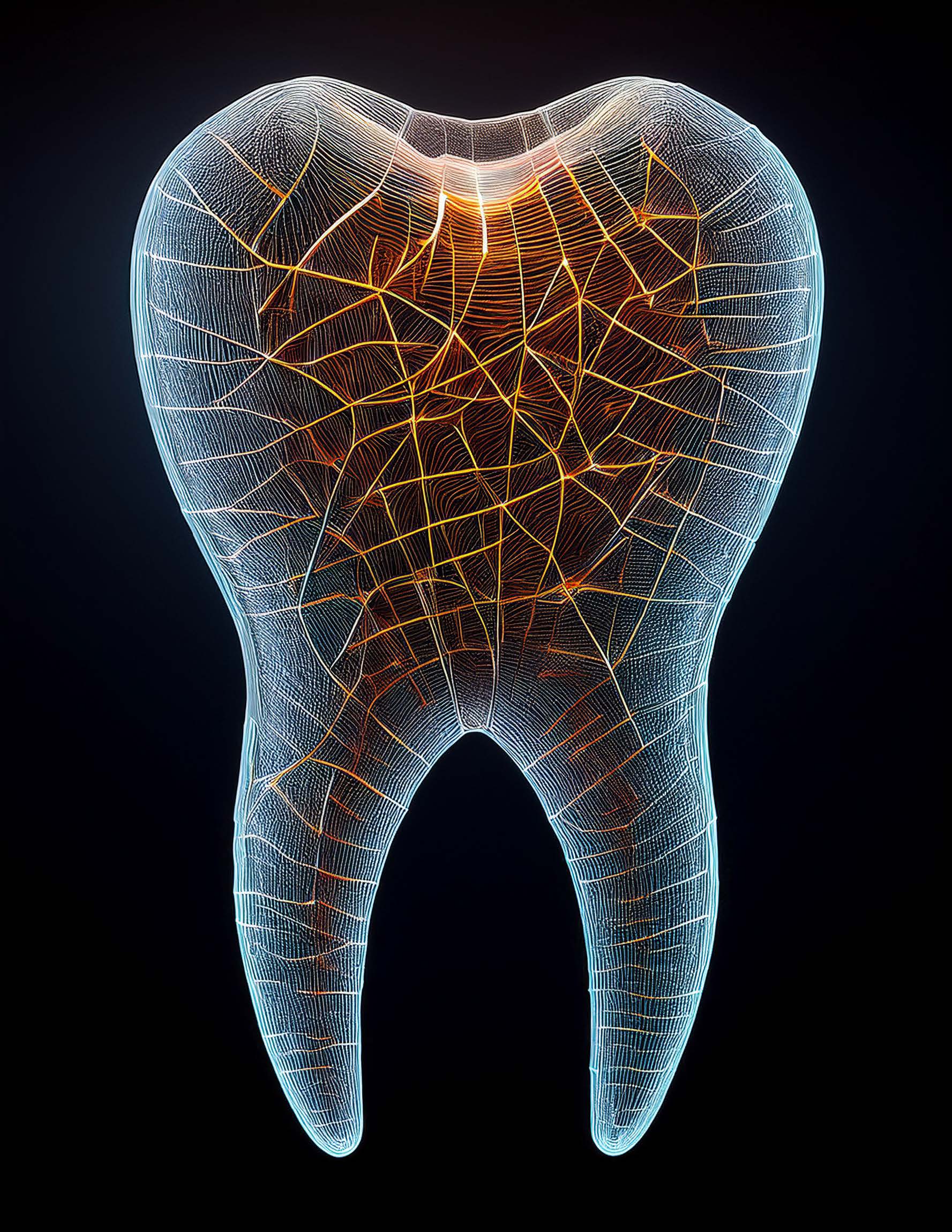
Nature has developed materials with exceptional properties that continue to challenge modern molecular engineering. Dental enamel, the hardest tissue in the human body, owes its remarkable strength to the molecular organization of hydroxyapatite nanocrystals. Inspired by this natural architecture, researchers have developed hydroxyapatite nanofibers capable of promoting bone regeneration while, through the incorporation of europium and gadolinium ions, acquiring optical and magnetic properties for biomedical applications. This article explains how biomimetics is driving the development of smart biomaterials that could transform regenerative medicine, medical imaging, and controlled drug delivery.
References
Reyes-Gasga, J., Koudriavtseva, O., Herrera-Becerra, R., & Escobosa, A. (2015). XRD characterization of crystallinity of human tooth enamel under influence of mechanical grinding. Mater Sci Appl, 6(6), 464-472. http://dx.doi.org/10.4236/msa.2015.66050
Johnson, C., Heiss, M., Kolar, L., & Luksha, L. (1998). Biology of the human dentition. Illinois University, Chicago College of Dentistry.
Vincent, J. F., Bogatyreva, O. A., Bogatyrev, N. R., Bowyer, A., & Pahl, A. K. (2006). Biomimetics: its practice and theory. Journal of the royal society Interface, 3(9), 471. https://doi.org/10.1098/rsif.2006.0127
Vallet‐Regí, M., & Ruiz‐Hernández, E. (2011). Bioceramics: from bone regeneration to cancer nanomedicine. Advanced Materials, 23(44), 5177-5218. https://doi.org/10.1002/adma.201101586
Bünzli, J. C. G. (2010). Lanthanide luminescence for biomedical analyses and imaging. Chemical reviews, 110(5), 2729-2755. https://doi.org/10.1021/cr900362e
Caravan, P. (2006). Strategies for increasing the sensitivity of gadolinium based MRI contrast agents. Chemical Society Reviews, 35(6), 512-523. https://doi.org/10.1039/b510982p[JS8.1][NM8.2]
Gai, S., Li, C., Yang, P., & Lin, J. (2014). Recent progress in rare earth micro/nanocrystals: soft chemical synthesis, luminescent properties, and biomedical applications. Chemical reviews, 114(4), 2343-2389. https://doi.org/10.1021/cr4001594
Downloads
Published
How to Cite
Issue
Section
License
Copyright (c) 2026 Revista de divulgación científica iBIO

This work is licensed under a Creative Commons Attribution-NonCommercial-NoDerivatives 4.0 International License.
Self-archiving or deposit of the works in their post-publication version (editorial version) is permitted in any personal, institutional or thematic repository, social or scientific networks. The above applies from the moment of publication of the article in question on the website of the Revista de divulgación científica iBIO.