
Applications of surfactants produced by bacteria
Keywords:
Surfactants, bacteria, biological detergentsAbstract
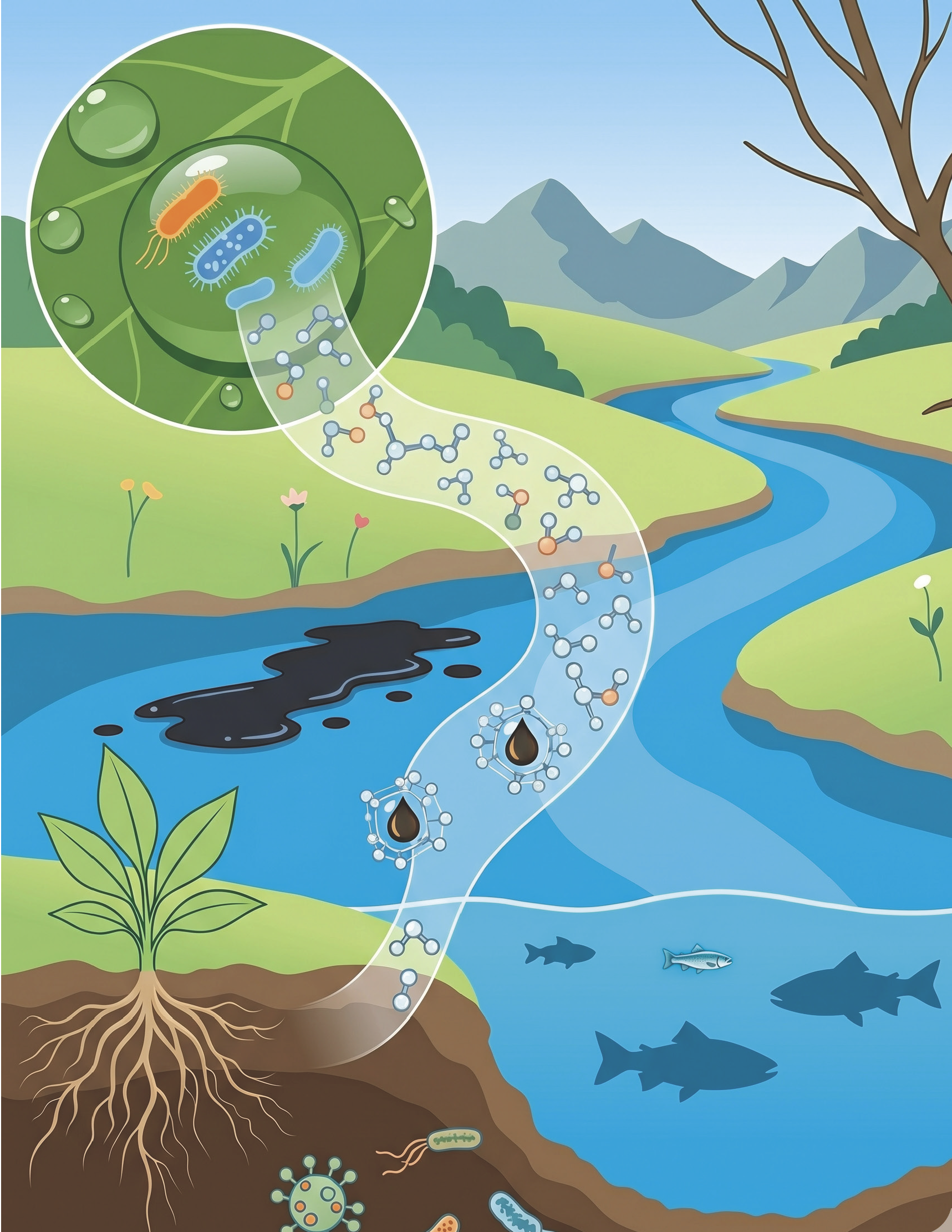
Surfactants are molecules used in cleaning products because of their ability to remove grease and hydrophobic contaminant making them part of everyday detergents. However, many are produced from petroleum-derived compounds, and made cause environmental impacts, such as proliferation of algae and bacteria in aquatic ecosystems as well as greenhouse gases emissions. For this reason, biosurfactants produced by living organisms such as bacteria can be considered an alternative to conventional surfactants, since they possess similar properties. In addition, they are biodegradable, biocompatible, and environmentally friendly. Their main applications include contribution to the removal of pollutants from water and soil.
References
Melikoglu, M. (2025). Biosurfactants for enhanced oil recovery and bioremediation in the modern petroleum industry: A global review. JCIS Open, 100168. https://doi.org/https://doi.org/10.1016/j.jciso.2025.100168.
V Nagtode, V. S., Cardoza, C., Yasin, H. K. A., Mali, S. N., Tambe, S. M., Roy, P., ... & Pratap, A. P. (2023). Green surfactants (biosurfactants): a petroleum-free substitute for sustainability─ comparison, applications, market, and future prospects. ACS omega, 8(13), 11674-11699. https://doi.org/10.1021/acsomega.3c00591.
Shah, S. K., Bhattarai, A., & Chatterjee, S. K. (2013). Applications of surfactants in modern science and technology. Modern Trends Sci Technol, 147-58.
Premathilake, D. S., Silva, A. A. M. P., Illankoon, W. A. M. A. N., Rosatelli, A., Beltrametti, F., Bava, A., ... & Vaccari, M. (2026). Environmental, Economic, and Social Trade-Offs in Biochar and Biosurfactant-Based Soil Remediation: A Critical Review Based on Mass Flow Analysis. Energy Nexus, 100644. https://doi.org/https://doi.org/10.1016/j.nexus.2026.100644.
Hsu, C. Y., Mahmoud, Z. H., Hussein, U. A. R., Abduvalieva, D., Alsultany, F. H., & Kianfar, E. (2025). Biosurfactants: Properties, applications and emerging trends. South African Journal of Chemical Engineering, 53(1), 21-39. https://doi.org/https://doi.org/10.1016/j.sajce.2025.04.002.
Cui, J., & Dörmann, P. (2025). Microbial degradation of hydrocarbons from petroleum assisted by biosurfactants: pathways and bioremediation potential. Biochimie.https://doi.org/https://doi.org/10.1016/j.biochi.2025.09.011.
Downloads
Published
How to Cite
Issue
Section
License
Copyright (c) 2026 Revista de divulgación científica iBIO

This work is licensed under a Creative Commons Attribution-NonCommercial-NoDerivatives 4.0 International License.
Self-archiving or deposit of the works in their post-publication version (editorial version) is permitted in any personal, institutional or thematic repository, social or scientific networks. The above applies from the moment of publication of the article in question on the website of the Revista de divulgación científica iBIO.