
Endophytic fungi: plants’ hidden allies
Ecological, agricultural, and pharmacological applications
Keywords:
Endophytic fungi, secondary metabolism, biotechnologyAbstract
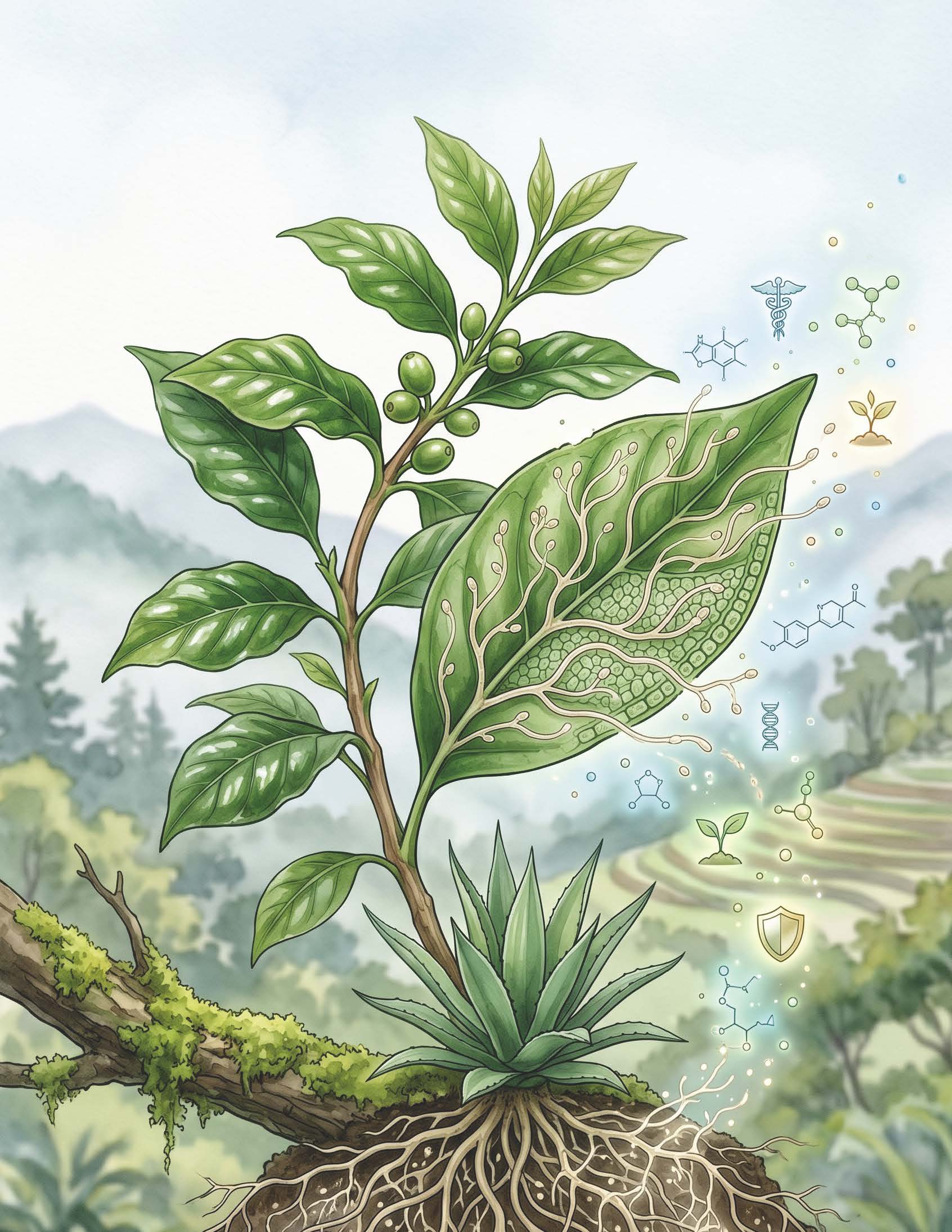
Endophytic fungi are microorganisms that live inside plants without causing harm and play key roles in their survival. They are found in almost all plants, although research has mainly focused on economically important species. These fungi produce secondary metabolites with antibacterial, antifungal, antiviral, and anticancer properties, making them relevant in medicine, biotechnology, and sustainable agriculture. Additionally, they contribute to plant defense and tolerance to environmental stress. In Mexico, their diversity remains underexplored, but they represent a promising source of compounds with industrial, medical, and agroecological applications.
References
Waqar, S., Bhat, A. A., & Khan, A. A. (2024). Endophytic fungi: Unravelling plant-endophyte interaction and the multifaceted role of fungal endophytes in stress amelioration. Plant Physiology and Biochemistry, Volume 206, 108174. https://doi.org/10.1016/j.plaphy.2023.108174.
Eo, J. K., Choi, J. W., & Eom, A. H. (2022). Diversity, Distribution, and Host Plant of Endophytic Fungi: A Focus on Korea. Mycobiology, 50(6), 399–407. https://doi.org/10.1080/12298093.2022.2154044
Glimn-Lacy, J., & Kaufman, P. B. (2006). Botany illustrated: Introduction to plants, major groups, flowering plant families (2nd ed.). New York: Springer.
Harrison, J. G., & Griffin, E. A. (2020). The diversity and distribution of endophytes across biomes, plant phylogeny and host tissues: how far have we come and where do we go from here? Environmental microbiology, 22(6), 2107–2123. https://doi.org/10.1111/1462-2920.14968
Wang, Z., Wang, L., Pan, Y., Zheng, X., Liang, X., Sheng, L., Zhang, D., Sun, Q., & Wang, Q. (2023). Research advances on endophytic fungi and their bioactive metabolites. Bioprocess and Biosystems Engineering 46(2), 165–170. https://doi.org/10.1007/s00449-022-02840-7
Waqar, S., Bhat, A. A., & Khan, A. A. (2024). Endophytic fungi: Unravelling plant-endophyte interaction and the multifaceted role of fungal endophytes in stress amelioration. Plant physiology and biochemistry: PPB, 206, 108174. https://doi.org/10.1016/j.plaphy.2023.108174
Watts, D., Palombo, E. A., Jaimes Castillo, A., & Zaferanloo, B. (2023). Endophytes in Agriculture: Potential to Improve Yields and Tolerances of Agricultural Crops. Microorganisms, 11(5), 1276. https://doi.org/10.3390/microorganisms11051276
Ortega, H. E., Torres-Mendoza, D., & Cubilla-Ríos, L. (2025). Antibacterial compounds isolated from endophytic fungi reported between 2021 and 2024. Antibiotics 14(7), 644. https://doi.org/10.3390/antibiotics14070644
Downloads
Published
How to Cite
Issue
Section
License
Copyright (c) 2026 Revista de divulgación científica iBIO

This work is licensed under a Creative Commons Attribution-NonCommercial-NoDerivatives 4.0 International License.
Self-archiving or deposit of the works in their post-publication version (editorial version) is permitted in any personal, institutional or thematic repository, social or scientific networks. The above applies from the moment of publication of the article in question on the website of the Revista de divulgación científica iBIO.